Madame
de Sévigné
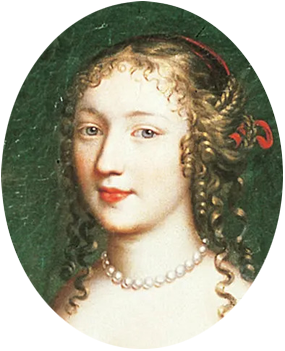
Marie de Rabutin-Chantal, who would become Madame de Sévigné, was born in Paris in 1626.
A woman of wit and letters, she is today best known for her rich correspondence with her daughter, the Countess of Grignan (more than 700 letters). In her letters, she shares her reflections, her friendships and her readings with many correspondents.
Her writing portrays, with intelligence and vibrancy, everyday life as well as the major public events of her time. Her unprecedented way of blending the personal and the political underpins her originality and remarkable modernity.
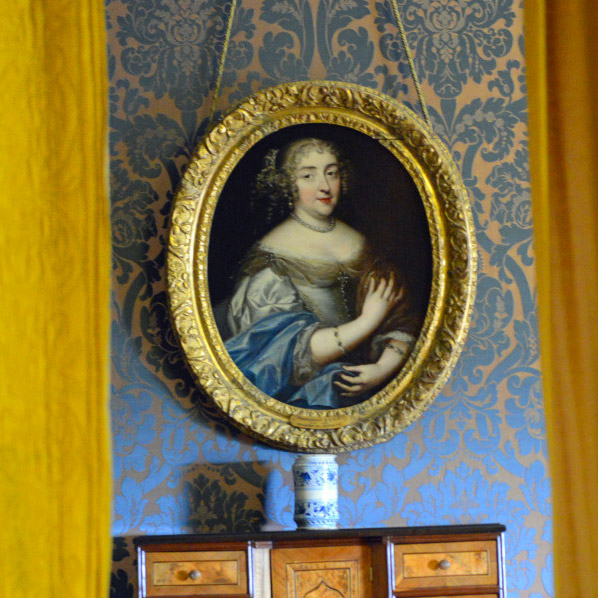

Who was
Madame de Sévigné ?
Orphaned at the age of seven, Marie was entrusted to her mother’s family, the Coulanges, who provided her with a high-quality education that nurtured her intellect and sharpened her wit.
At 18, she married Henri de Sévigné, with whom she had two children: Françoise-Marguerite and Charles. Widowed at 25, she then enjoyed a form of freedom she would never again relinquish. In the salons and at court, she met great men of theatre such as Molière and Corneille. Her daughter took part in ballets at the court of the Sun King.
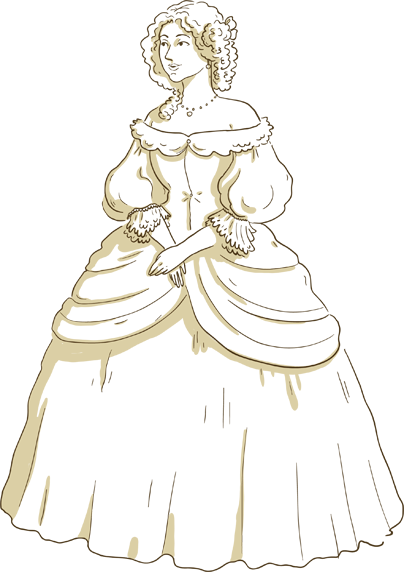
Why write ?
In 1669, Madame de Sévigné’s daughter, Françoise-Marguerite, married the Count of Grignan. He was appointed Lieutenant-General in Provence by Louis XIV and had to return to his estates. His wife accompanied him.
For Madame de Sévigné, it was heartbreaking. This separation and absence sparked her need to write.
She wrote to her daughter on 5 October 1673: “I am always looking for you, and I find that everything is lacking, because you are lacking.”
Madame de Sévigné
à Grignan
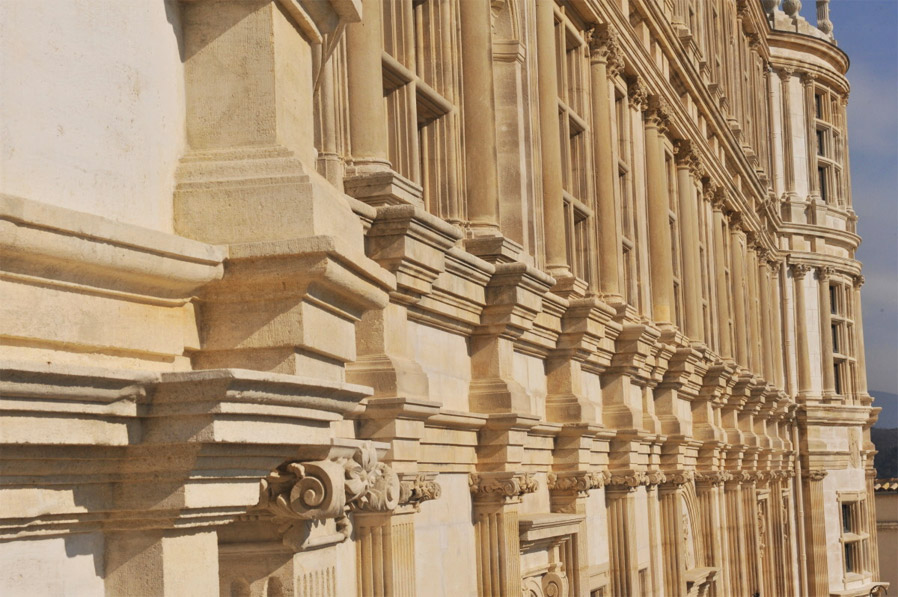
She wrote to her daughter two or three times a week.
While living at the Hôtel Carnavalet in Paris, she stayed at the Château of Grignan three times, for a total of four years.
She discovered Provence and spent time with her daughter and grandchildren. It took her nearly two weeks to travel down from Paris.
She travelled by boat and by litter; once, she capsized in the Rhône near Tain and was rescued by boatmen !
Madame
de Sévigné
through her
correspondence
Throughout her correspondence, we discover an educated and independent woman, managing her affairs, advising her relatives and often travelling alone.
Curious about everything, she discussed politics, literature, religion, philosophy, as well as gossip, fashion and beauty.
Her letters, full of humour, paint vivid and uncompromising portraits of her contemporaries, recount major affairs of her time and bring to life the daily existence of a 17th-century family, between joys and tragedies. Through her questions and remarks, she sketches the portrait of a society ranging from the nobles of Provence to the Parisian salons.
Madame de Sévigné died on 17 April 1696 at the Château of Grignan, where she rests in the Adhémar family vault.
An œuvre born after her death
Her letters, never published during her lifetime, first appeared thanks to her cousin Roger de Bussy-Rabutin, who included them in his Memoirs and Letters. Published without the family’s consent, they were only properly edited in 1734 in Aix-en-Provence, with the authorisation of her granddaughter, Pauline de Simiane.
I think constantly of Grignan, of all of you, of your terraces, of your beautiful and triumphant view.
9 october 1689
You are such pleasant company in Grignan; you have such good food, such good music, such a fine study that, in this beautiful season, it is not solitude, it is a very pleasant republic, but I cannot endure the north wind and the horrors of winter.
Letter to her daughter, 7 July 1680
It is in your hands, my dear child, that my letters turn to gold. When they leave mine, I find them so heavy and so full of words.
Letter to her daughter, 8 January 1690
How excessive you are in Provence! Everything is extreme: your heat, your clear skies, your north winds, your unseasonal rains, your autumn thunder; nothing is gentle or temperate.
Letter to her daughter, 1 November 1679